September 2025
Common Insecticides: How they work. The benefits. The drawbacks.
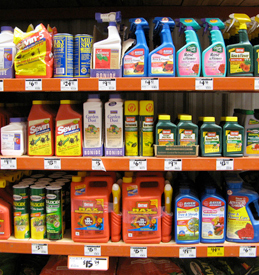 Ever wonder what’s really happening when you spray that bottle and the bugs go belly-up? Behind every satisfying splat is a cocktail of chemistry designed to short-circuit insect biology in wildly specific ways. Here’s a peek inside six of the most common.
Pyrethrins: Derived from chrysanthemum flowers.
Mode of Action: Pyrethrins target the insect’s nervous system, specifically the sodium channels in nerve cells. They keep these channels open, causing uncontrolled nerve firing—basically causing spasms that ends in paralysis.Pyrethroids: The Lab-Enhanced, synthetic versions of Pyrethrins.
Benefits: They are fast-acting, Insects often drop dead in just seconds. They are biodegradable and quickly break down in sunlight and air, making them less persistent in the environment and are approved for organic gardening.
Drawbacks: If misapplied, they can kill pollinators like Bees and are dangerous to fish and aquatic life. Insects can develop resistance especially with repeated use. They can cause skin irritation, dizziness, or nausea if inhaled or absorbed in large amounts.
Mode of Action: Pyrethrins target the insect’s nervous system, specifically the sodium channels in nerve cells. They keep these channels open, causing uncontrolled nerve firing—basically causing spasms that ends in paralysis.Nicotine: The Original Neurotoxin. Before it was a vice, nicotine was a weapon. Farmers used tobacco extracts to kill pests long before synthetic insecticides hit the scene.
Benefits: They are fast-acting, Insects often drop dead in just seconds. They are biodegradable and quickly break down in sunlight and air, making them less persistent in the environment and are approved for organic gardening.
Drawbacks: If misapplied, they can kill pollinators like Bees and are dangerous to fish and aquatic life. Insects can develop resistance especially with repeated use. They can cause skin irritation, dizziness, or nausea if inhaled or absorbed in large amounts.
Mode of Action: Nicotine binds to acetylcholine receptors in the insect’s nervous system, causing overstimulation and eventual paralysis.Neonicotinoids: The synthetic relatives of nicotine, designed to be safer for humans and more targeted toward insects.
Benefits: Fast acting and effective on a broad range of insects
Drawbacks: Can be highly toxic to humans and animals, unstable in sunlight.
Mode of Action: Like nicotine, they bind to acetylcholine receptors—but they do it more selectively, hitting insects harder than mammals.Fipronil: Born in a French lab, raised by multinational corporations, and deployed worldwide to zap bugs with nerve-targeting precision.
Benefits: Neonics can be absorbed by plants and distributed throughout their tissues, turning the entire plant into a bug buffet of doom.
Drawbacks: Neonics have been linked to bee population declines, leading to restrictions in some regions. Need to be used with caution and conscience.
Mode of Action: Fipronil targets the insect’s central nervous system causes hyperexcitation of nerves and muscles, leading to paralysis and death.Silica dust: Sand and stone particles finely ground. Often less than 10 micrometers wide.
Benefits: Highly effective against a wide range of pests. Long-lasting residual action and useful against resistant pests that don’t respond to older insecticides.
Drawbacks: Slow-acting. Pests may linger before dying. Toxic to aquatic life and can contaminate water sources if misused. Potential harm to pets if ingested. Environmental persistence.
Mode of Action: The dry-out death. It absorbs moisture. When insects encounter silica dust, the dust particles cling to their exoskeleton and removes the waxy outer coating that helps insects retain water.Borax: A naturally occurring mineral that’s widely used in pest control.
Benefits: Insects can’t develop a resistance to it. Ideal for dry, hidden areas where pests travel. Considered very low in toxicity for humans and pets.
Drawbacks: Unlike chemical sprays, silica dust kills through dehydration. A process that can take days depending on the type of insect and exposure level. Silica dust also loses effectiveness when exposed to humidity or moisture.
Mode of Action: Mixed with ingredients like sugar, insects consume it and it disrupts their digestive system and nervous function, leading to death. Also like Silica dusts, it clings to their exoskeletons causing dehydration.
Benefits: Natural and safer than many chemical pesticides. Social insects like ants and cockroaches will carry the bait back to their nests, spreading the poison throughout the colony.
Drawbacks: Slow acting. It may take days or weeks to fully eliminate a colony. It doesn’t work on all insects. Overuse can harm soil and non-target insect species.