House Finch Havoch
I’ve recently run into several homes having big issues with House Finches. They return year after year with growing numbers and they can create a huge headaches for a homeowner.
Knowing the enemy can help:
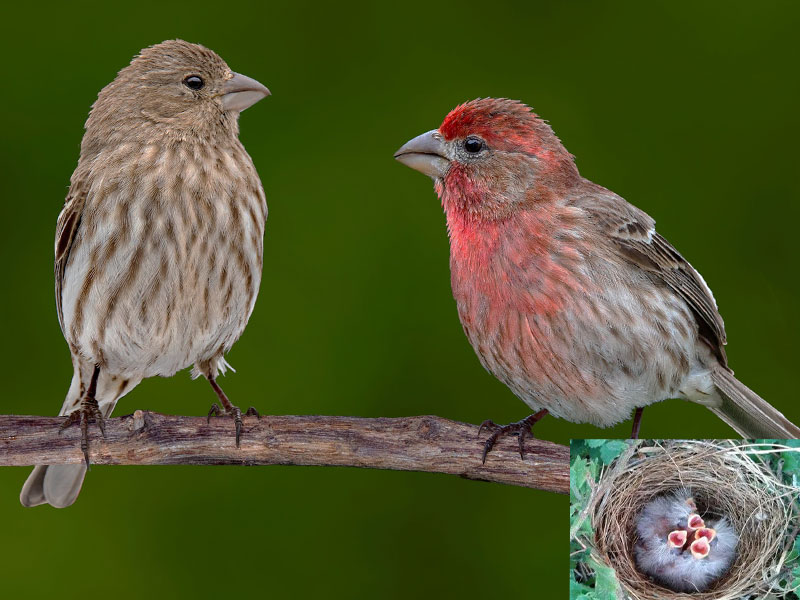
These pesky birds are about 5 to 6 inches tall, males have a rosy-red head, breast and rump while females are a drab grey-brown in color.
They thrive in urban and suburban neighborhoods and often visit in large numbers. They’ll set up their nests all over your home and property
wherever they can find spot. It’s common to see them building under your eves, in a planter box or even in the wreath hanging on your door.
And while this may seem cute for awhile, it can turn into a big problem when the poop starts falling and they convince all their cousins to move in.
They are a protected species in Washington under the native species act, so moving them along before they get settled can be very important.
The problems:
The biggest issue is usually just the poopy mess they make. Their dropping will quickly cover everything around the nesting area.
They often peck and chew on your home as well causing some ugly, but usually minor damage. If you have fruit trees, they will most likely eat it before you get a chance.
They can also cause other pest issues by bringing in bird mites, fleas and other insects that live in and around the nests.
What can you do?
- Block nesting and roosting sites as best you can using wire mesh, netting and other materials to keep them out of your eves.
- Install bird spikes: Plastic or stainless steel bird spikes on window ledges and beams, downspouts and other location to keep them from roosting.
- Fill gaps and crevices: Seal up holes, rafter gaps, and exterior vents with wire mesh, foam, caulk and other methods.
- Use netting: Drape netting over porch rafters, decorative alcoves, and hanging planter hooks.
- Hanging visual deterrents: Hang shiny reflective tape, old CDs, or visual deterrents and predator decoys near their favorite spots.
FINAL NOTE: Finches primarily eat seeds, fruit, and other grains, but like most birds, it's hard to turn down a good meal. If bugs are plentiful the birds will find them. So pay attention to what they are eating. The finches might just be pointing out a termite or carpenter ant problem.