
September 2025
Little known Rat Facts
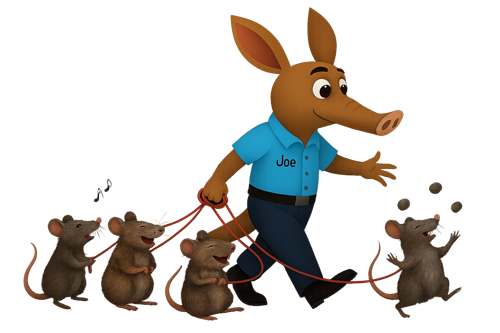
- Rats can laugh and enjoy being tickled! They produce high-frequency, ultrasonic vocalizations or chirps. This "laughter" is a sign of joy and is too high-pitched for humans to hear without special equipment. Studies show that rats will actively seek out tickling, and these chirps are associated with positive brain activity and social behavior, similar to human laughter.
- Their teeth never stop growing. A rat's front teeth grow continuously, so they must constantly chew to wear them down. This chewing also keeps their teeth strong, with enamel stronger than steel.
- Can't vomit: Rats are biologically unable to vomit.
- Prone to peer pressure: As social beings, rats can succumb to peer pressure, copying the behaviors of other rats in their group.
- They don't sweat. Rats do not have sweat glands. They regulate their body temperature by constricting or expanding the blood vessels in their tails.
- They can survive falls. Rats have been known to survive falls greater than 5 stories without injury. Like a cat, they can contort their bodies mid-air, use their tails as a stabilizer and relax their muscles allowing them to land without injury.
- A keen sense of smell: Rats have a very powerful sense of smell, and have been trained to find landmines, and even detect diseases like tuberculosis.
- Communicating with scent glands on the bottom of their feet. Through their highly developed sense of smell, rats exchange information about individual identity, social status, sex, relatedness, and even emotional states like stress or fear.
- Rats are capable of dreaming and processing their daily experiences.
- Rats can tread water for as long a three days and survive being flushed down a toilet.
- A group of rats is called a mischief. A female rat is called a doe or, if she is pregnant or has had a litter, a dam. A male rat is called a buck, and a baby rat is called a pup