January 2026
The Benefits & Concerns of Glue Traps
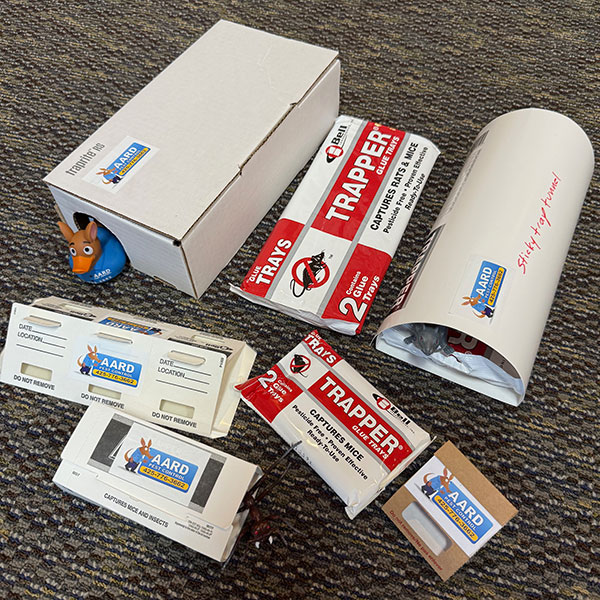
Glue traps (aka: glue boards) are flat boards coated with a strong, non drying adhesive designed to capture pests that walk across them. When it comes to managing rodents and insects, glue traps are one of the most widely recognized tools in pest control. They’re inexpensive, easy to use, and available almost everywhere. But they also come with important practical considerations that homeowners should understand before relying on them. At Aard Pest Control, we believe in educating our customers so they can make informed, responsible decisions about protecting their homes.
Benefits of Glue Traps
- Cost Effective: among the most affordable pest control tools available. For homeowners dealing with occasional intruders, they offer a low cost monitoring option.
- Easy to Use: There’s no snapping mechanism, no baiting required, and no complicated setup. You simply place them along walls, behind appliances, or in other areas where pests travel.
- Non Toxic to Humans: Unlike rodenticides, glue traps contain no poisons. This makes them usable in sensitive environments such as kitchens, food prep areas, and homes with children or pets, though placement is very important.
- Excellent Monitoring tool: Not only do they catch samples for identification, but even when they appear empty, it can still tell you a lot; droppings, hair, footprints, or insect fragments as well as what’s not there, can help a professionals identify the type and severity of an infestation.
I once had a neighbor who was trying to remove some mice that had moved into the housing around her hot tub. She unwrapped a couple of glue boards, baited them, but set them down on top of the hot tub while she ran inside to answer her phone. Only a few minutes later, she returned to find several small birds were already stuck in the traps.
- Non Target Animals: Pets, birds, reptiles, and beneficial wildlife can accidentally become stuck. They really should never be placed outdoors. And even when placed in a crawlspaces, attics and sheds, We need to consider what else may get stuck and do our best to mitigate any potential of trapping the wrong target.
- Animal Welfare Issues: Another concern is humane treatment. Animals caught on glue boards can suffer for hours, experience stress, dehydration, and injury as they struggle to escape.
- Not Ideal for Larger Infestations: Glue traps are great for monitoring and can often catch more than a few intruders, but they are not effective as a standalone solution for significant pest problems. You’ll never catch enough cockroaches to solve the problem, and rodents will learn to avoid them. They need to be combined other treatment methods if we suspect mor that a very small problem.
- Messy or Distressing Disposal: Removing an animal from a glue board can be unpleasant and emotionally difficult for many homeowners.
- Potential for Contamination: Trapped animals can attract flies or other insects, increasing the risk of bacterial contamination—especially in food related environments.
- Monitoring activity in commercial and residential settings
- Short term rodent control especially in high risk contamination areas (e.g., food storage rooms)
- A Non chemical strategies where pesticides are not an option. However, they should always be used thoughtfully, placed strategically, and checked frequently.